It’s a strange feeling to walk out of a movie theater in 2026 having just watched a film that was released eight months ago, but that’s the peculiar time-loop we’re living in with Predator: Badlands. Dan Trachtenberg’s ferocious, philosophical detour into the lore of the galaxy’s most notorious trophy hunters hit screens on November 5, 2025, and its reputation has only grown louder in the months since. With a TMDb score of 7.826, it sits comfortably in the upper echelon of the franchise, but numbers don’t capture the uneasy hum in the auditorium as the credits rolled. This isn’t just a good Predator movie; it’s a genuinely surprising piece of science fiction that dares to ask what happens when the hunter loses his tribe.
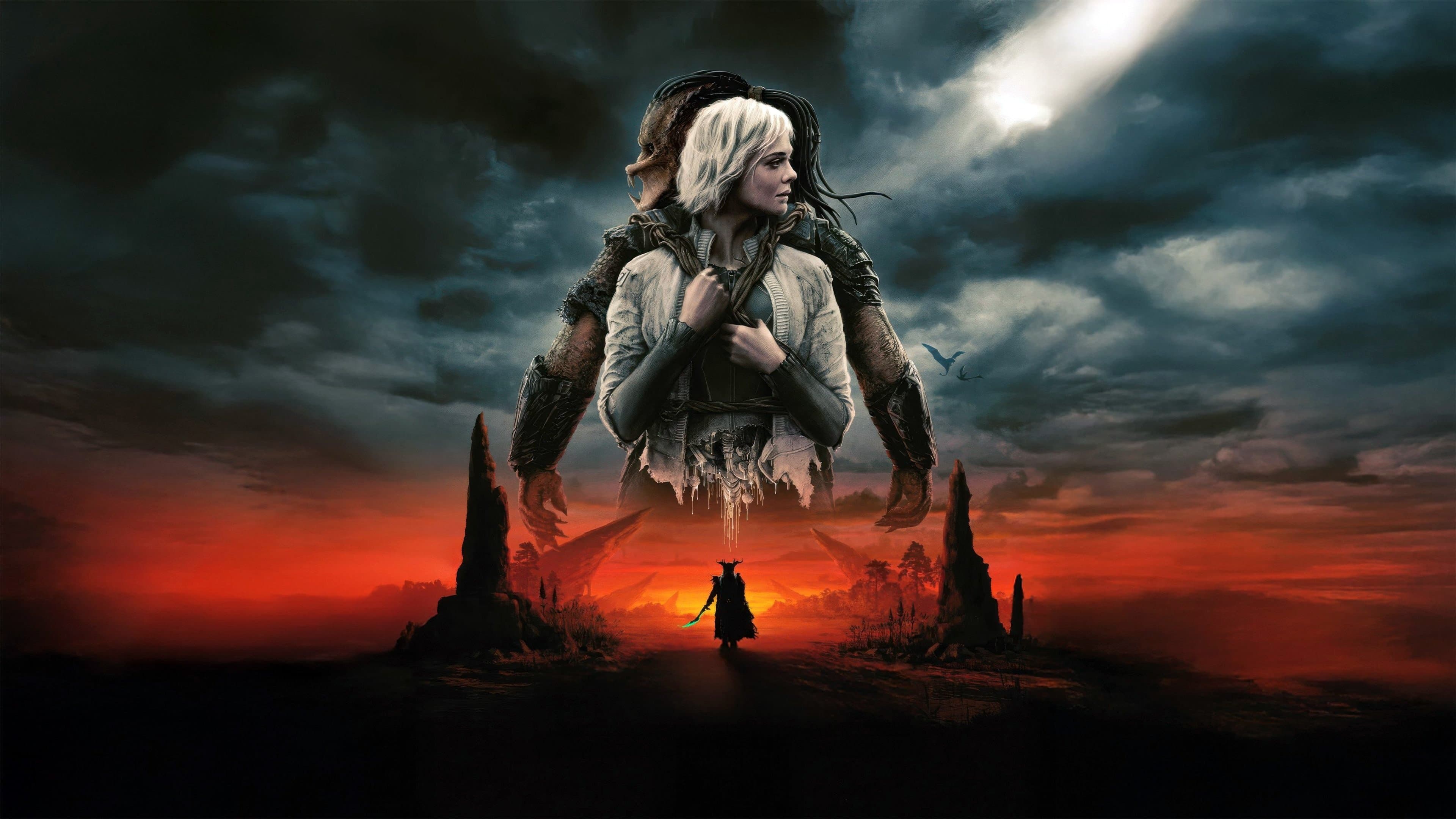
The logline is deceptively simple: cast out from his clan, a young Predator finds an unlikely ally in a damaged android and embarks on a treacherous journey in search of the ultimate adversary. But Trachtenberg, who previously revitalized the series with the lean, claustrophobic Prey, isn't interested in a simple retread. He takes the boldest swing of his career by essentially splitting the narrative into two distinct tracks. On one side, we have the Yautja - the film’s proper name for the species - a young, disgraced warrior rendered in astonishingly tactile practical effects and suit work, played in the suit by Michael Homick with a vocal performance from Stefan Grube that conveys more pathos than you’d expect from a mandibled killing machine. On the other, we have Elle Fanning pulling double duty as Thia and Tessa, two characters who exist in a tense, mirrored relationship with the alien at the center of the storm.
Fanning is the anchor here, delivering a performance that oscillates between brittle humanity and cold, mechanical mimicry. Thia is a scavenger scraping by on a frontier world, while Tessa is the android she discovers - or perhaps, the android that discovers her. The dynamic between the feral, exiled Yautja and this damaged artificial intelligence is the film’s secret weapon. We’ve never seen this dynamic before: a partnership, however reluctant, built not on mutual respect but on a shared absence. The Predator has lost his clan, his honor, his purpose. Tessa has lost her memories, her handler, and any clear definition of self. They are two broken instruments trying to play a symphony of violence.
Trachtenberg directs with a patient, muscular hand. The 107-minute runtime flies by, but it never feels rushed. He understands that the best Predator sequences are about geometry and patience, not just gore. One extended chase sequence through a desiccated riverbed is a masterclass in spatial tension, using the creature’s heat-vision POV not as a gimmick, but as a way to illustrate the loneliness of his hunt. There is a moment where the young Yautja stops, scans the horizon, and simply waits - listening, smelling, feeling - and you realize the film has made you feel his isolation, not just his aggression.
The supporting cast, including Dimitrius Schuster-Koloamatangi as the conflicted Dek and Ravi Narayan as the pragmatic Bud, fills out the world with lived-in grit. But the most surprising performance comes from Alison Wright, voicing MU/TH/UR, a familiar name for fans of the Alien franchise. This crossover nod is handled initially with subtlety - a voice, a system prompt - that slowly reveals itself to be more than just fan service. It ties Badlands into a broader cinematic universe of corporate greed and artificial intelligence without ever feeling like a trailer for a different movie. It’s a wry, existential choice, making the android Tessa essentially a lost child of the same system that birthed the Nostromo’s tyrannical AI.
Unsurprisingly, the film has sparked a lively debate online. Some purists grumble that the Predator is too "soft," that his alliance with Fanning’s android dilutes the primal terror of the original 1987 classic. But that misses the point. Badlands isn’t about the terror of the hunt; it’s about the tragedy of the hunter. The "ultimate adversary" he seeks isn’t just a worthy quarry - it’s an existential benchmark. If he cannot find a foe worthy of his blade, then his exile is eternal. This is a coming-of-age story, albeit one where the protagonist has plasma casters and mandibles that click in a furious language of clicks and hisses.
The production design is spectacular, a dusty, lived-in future that feels like the American Southwest filtered through a Blade Runner lens. It’s a world that feels ancient and desperate, a fitting backdrop for a story about proving one’s worth. And the final act, which I won’t spoil, delivers a confrontation that is less about fireworks and more about a quiet, brutal negotiation of fates.
Predator: Badlands is the kind of franchise installment that justifies the existence of franchise installments. It respects the mythology while boldly expanding it. It gives us a monster who is more than just a monster, and a machine who is more than just a tool. In a landscape of endless sequels and nostalgic reboots, Trachtenberg and his team have crafted something that feels like a dark fable rather than a product. It’s a film about searching for a worthy rival when you’ve already lost the only family you had. It is, by far, the most human Predator film ever made - which is ironic, considering its two leads aren’t human at all. If you missed it in theaters, do yourself a favor and carve out an evening. Bring the noise, but also bring the questions. This one stays with you long after the clicks fade.