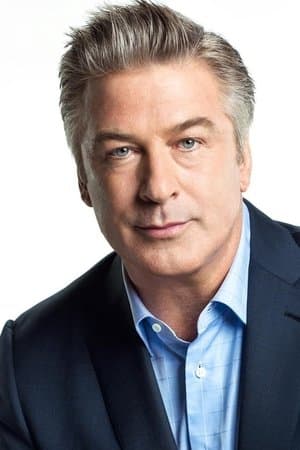
The filmmakers behind a forthcoming documentary about Alec Baldwin say their subject has made his feelings about the project abundantly clear, and those feelings are not warm. According to the team behind the film, Baldwin “really, really didn’t like” what he saw of the documentary - a reaction the directors describe without much surprise, given that the project turns a scrutinizing lens on one of the most famous and most publicly examined actors of his generation.
The account, which circulated in entertainment press this week, offers no specifics about what precisely in the film drew Baldwin’s ire. What the filmmakers do suggest is that the actor’s displeasure was emphatic rather than mild, and that it arrived during the kind of back-and-forth that often accompanies documentaries made without a subject’s blessing. That the film exists at all, apparently without Baldwin’s enthusiastic cooperation, places it in a long tradition of unauthorized portraits that subjects view with suspicion, irritation, or outright hostility.
Baldwin, of course, is hardly a stranger to being the story. His career spans decades of stage, television, and film work, including his long-running portrayal of Jack Donaghy on “30 Rock” and his Academy Award-nominated turn in “The Cooler.” He has also spent years as a tabloid fixture, a dynamic he has sometimes leaned into and sometimes fought against. More recently, his public life has been dominated by the aftermath of the 2021 shooting on the set of the Western “Rust,” in which cinematographer Halyna Hutchins was killed and director Joel Souza was wounded. A New Mexico judge dismissed the involuntary manslaughter charge against Baldwin in 2024, and the legal saga has shadowed nearly every professional development since.
That backdrop makes any documentary about Baldwin a sensitive proposition, and the filmmakers’ account of his reaction will inevitably be read through it. A portrait that revisits the “Rust” case, or that examines his decades in the public eye with a critical eye, is unlikely to win a warm reception from its subject - and the directors appear to be framing Baldwin’s rejection as evidence that the film has teeth rather than as a problem to be managed.
There is also the question of access. Documentaries made with a star’s cooperation tend to arrive with promotional synergy and a subject’s blessing; those made without it often face legal friction, public pushback, and the considerable soft power of a celebrity who can command airtime to argue his side. The filmmakers have not indicated that Baldwin attempted to block the project, and no release details or distribution plans have been confirmed - the only certainty at this point is the reaction itself.
For USA Film News readers, the practical takeaway is modest. A documentary about a major American actor exists, its makers say he disliked it intensely, and the film now carries the added intrigue of that disapproval. In a media environment where celebrity documentaries often function as authorized brand extensions, a subject’s open hostility can paradoxically sharpen a project’s appeal, signaling that audiences will get something other than a victory lap.
A Career That Resists Easy Summary
Baldwin’s résumé is unusually varied: blockbuster turns in “The Hunt for Red October” and “Glengarry Glen Ross,” comedic stardom on “30 Rock,” a long association with “Saturday Night Live” as a recurring Donald Trump impressionist, and a parallel life as a memoirist and podcaster. Any documentary worth its running time would have to reckon with those contradictions - the acclaimed performer and the man whose off-screen controversies periodically eclipse the work. A filmmaker attempting that balance could easily produce something a subject finds unflattering, and Baldwin, famously voluble, is not known for absorbing criticism quietly.
What Comes Next
No release window, distributor, or formal title for the documentary has been announced, and the filmmakers have not elaborated on when Baldwin saw the material or how the exchange unfolded. For now, the story is less about the film’s content than the confirmation that the subject and the storytellers are not on the same page - a rift that will likely define early coverage of the project.
Baldwin’s representatives have not offered a public response to the filmmakers’ characterization. Whether his objection will translate into legal action, a public rebuttal, or simple silence remains to be seen. What the episode does establish is that Baldwin, even as his career continues, remains a figure who inspires strong reactions - including, it turns out, his own, directed at the people making a film about him. For audiences, that alone may be enough to put the documentary on the radar.
Source: The Hollywood Reporter