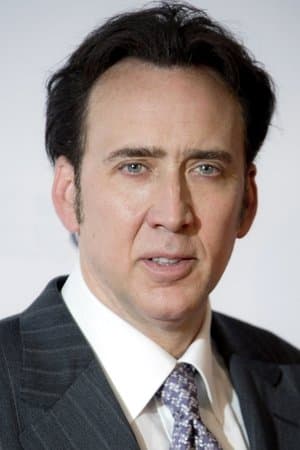
Nicolas Cage has offered his assessment of Ryan Gosling's turn as Ghost Rider, roughly two decades after Cage himself played the Marvel antihero on screen. The Oscar winner's remarks arrive as something of a full-circle moment: Cage headlined the 2007 film and its 2011 sequel as Johnny Blaze, while Gosling has been attached to a separate take on the character in recent years.
Cage, who has never been shy about revisiting his own filmography, suggested he sees the character as one that rewards reinvention. He framed the role as a piece of comic-book mythology capacious enough to support wildly different interpretations, and he indicated he had no interest in guarding the part as though it belonged to him alone. The actor's tone was characteristically effusive rather than territorial - closer to a fan passing a torch than a veteran defending turf.
The original films cast Cage as a stunt motorcyclist who makes a Faustian bargain and finds himself transformed into a flaming-skulled spirit of vengeance. Those movies landed at a moment when Marvel's cinematic footprint was far smaller than it is today, and Cage has spoken in the past about the experience with a mixture of affection and candor. He has described the prosthetics and visual-effects work as demanding, and he has been upfront that the finished films did not always match the vision he had in his head.
Gosling's involvement with the character has been a slower-burning story. The actor has spoken over the years about his affection for the Ghost Rider comics, and his name has circulated around a potential project without a firm production timeline materializing. That ambiguity has made Cage's blessing notable: rather than dismissing the idea of a successor, he welcomed it.
What Cage emphasized was the durability of the underlying concept. A man bound to a demonic power, riding a motorcycle and wrestling with the cost of his curse, offers a darker emotional register than most superhero fare. Cage suggested that is precisely why the character keeps attracting serious actors - the role carries built-in tragedy, and it invites a performer to play anguish rather than invincibility.
A Character Built for Different Eras
The gap between Cage's Ghost Rider and any future version spans a tectonic shift in how comic-book movies are made and marketed. When Cage first donned the skull, standalone superhero films were still something of a gamble; today they anchor studio slates. A new take would arrive with different expectations, different technology and a different audience - one that has been trained by more than a decade of interconnected universes.
Cage's comments implicitly acknowledge that context. He did not compare performances or measure Gosling against his own work. Instead he stressed that the character's mythic roots give each actor room to find something new. That generosity is notable in a genre where fan discourse often turns casting into a zero-sum contest.
He also returned to a theme he has raised before: the gap between what a film looks like on the page and what survives the editing process. Cage has been philosophical about his own brushes with effects-heavy productions, and he applied a similar lens here, suggesting that any actor taking on a transformation-heavy role should expect the practical realities of long hours in makeup and the discipline of performing through layers of prosthetics.
For Gosling, the endorsement carries symbolic weight. He has built a career on alternating between prestige dramas, genre experiments and projects driven by personal enthusiasm, and a Ghost Rider film would fit that pattern as a passion project rather than a franchise obligation. Whether the project advances remains an open question, but Cage's remarks remove any suggestion of resistance from the actor most associated with the role.
The timing of Cage's comments also serves as a reminder of how long the character has been part of the screen landscape. Two decades is enough time for a generation of moviegoers to encounter Ghost Rider first through Cage and only later through the comics or through talk of a new adaptation. That lineage gives the character a rare kind of continuity, even without a connected film series.
Cage, for his part, seems content to be a chapter rather than the whole book. His message was less a verdict on Gosling than an invitation: the skull, the bike and the bargain are big enough for more than one rider. Given how rarely actors in franchise roles speak so warmly about their successors, that alone makes his comments worth noting.
Source: The Hollywood Reporter