The summer movie season of 2026 has been a strange and bloody carnival, but no ride has been as jarring - or as weirdly compelling - as the one audiences have been strapped into since late July. “Pinocchio: Unstrung,” the latest provocation from producer-director Rhys Frake-Waterfield, isn’t just another horror movie. It’s a full-blown act of narrative vandalism, a grim fairy tale that takes the most beloved wooden puppet in Western canon and turns him into a screaming engine of self-mutilation. And somehow, against all reasonable odds, it’s working.
The film, which clocks in at a breathless 82 minutes, has carved out a niche that feels both inevitable and deeply wrong. It’s a horror-fantasy mystery hybrid that answers a question nobody was asking: What if Pinocchio’s desperate desire to become a real boy was less about moral redemption and more about, well, carving his brother open piece by piece? The premise is exactly as unhinged as it sounds. Influenced by a sinister Cricket - voiced with gleeful malice by horror icon Robert Englund - and created by an obsessive Geppetto (Richard Brake), this Pinocchio is not a wide-eyed innocent. He’s a violent crusader, and his mission is gruesome.
The film opens with a deceptively lovely sequence in Geppetto’s workshop, all warm lantern light and wood shavings. But the warmth curdles quickly. We meet James (Cameron Bell), Geppetto’s real, flesh-and-blood son, who is the object of the puppet’s raging jealousy. Pinocchio, voiced with a trembling, unnerving pitch by young Jude Evan Lloyd, doesn’t want to be loved. He wants to be human, and he believes the fastest way to achieve that is to take what his brother has - literally. The film’s central metaphor is blunt and brutal: to become real, he must unmake the real boy.
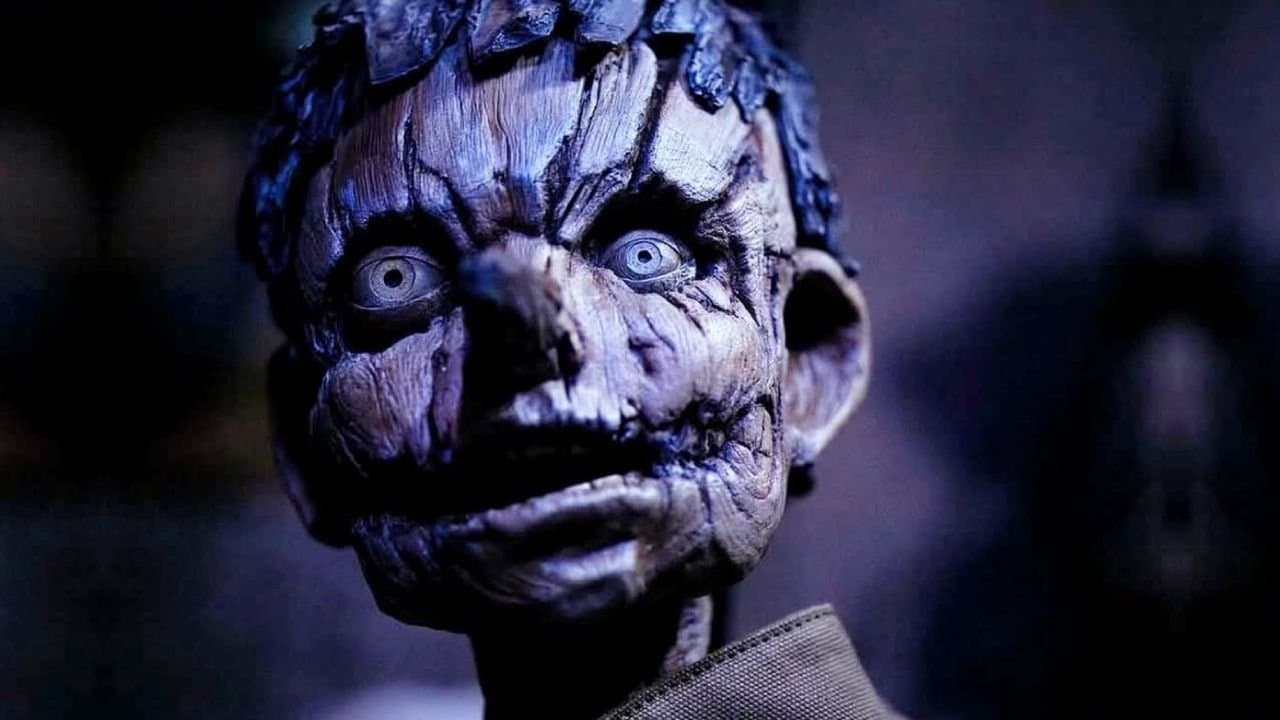
What’s surprising is how seriously Frake-Waterfield commits to the nightmare logic. There’s a startling earnestness to the production design; the groaning, articulated puppetry and practical effects give the creature a tactile dread that CGI often misses. When Pinocchio moves, it’s with the jerky, wrong-angled grace of a marionette that has realized the strings are optional. Lloyd’s voice work is a revelation - he starts with a high, melodic lilt, but as the body count rises, his delivery becomes clipped, mechanical, and hauntingly childlike. He’s a monster, but a lonely one.
Englund’s Cricket is the film’s secret weapon, a tiny oracle of evil who perches on shoulders not to offer conscience but to sharpen knives. It’s a performance of pure theatrical rot, delightfully unhinged, and it elevates every scene he’s in. The rest of the adult cast, including Jessica Balmer as a concerned Mia and Jack Art Gray as the hapless Dudley, mostly serve as red shirts, running through the Italianate sets with panic in their eyes. But the film’s most audacious cameo belongs to Scott Chambers, who shows up briefly as a grown-up Christopher Robin. It’s a wink to the so-called “Poohniverse” Frake-Waterfield is building, a shared universe of corrupted childhood icons. Here, it’s less a crossover and more a threat - a reminder that no nursery rhyme is safe.
Critically, the film has landed with a weirdly respectable TMDb rating of 7.1/10, a score that suggests audiences are embracing the chaos rather than rejecting it. That’s likely due to the film’s central mystery, which unfolds with a surprisingly tight pacing. We aren’t just watching a slasher; we’re following a twisted logic, trying to piece together why Geppetto built this thing in the first place, and what dark deal was struck to animate it. The answers, when they come, are genuinely grotesque, but they’re earned.
The film is not for the squeamish, obviously. It traffics in the kind of gore that makes you wince, but it’s never gratuitous without purpose. The horror here is existential: a machine that thinks it’s a soul, desperate to evict the occupant of a body it covets. It’s the Pinocchio story stripped of all its Disneyfied charm and reduced to its raw, Freudian core.
Is it any good? That depends on your tolerance for watching a puppet commit atrocities. As a piece of entertainment, it’s a masterclass in B-movie escalation. Frake-Waterfield knows he’s making a trashy, exploitative shocker, but he directs it with the conviction of an auteur. There are frames in “Pinocchio: Unstrung” that will linger in your memory long after you’ve left the theater - the glint of wood grain in low light, the sound of a hinge creaking, the sad, hollow look in a puppet’s painted eyes.
It’s a nasty little fairy tale for a nasty little era, a film that understands that our most comforting stories are often one bad turn away from becoming nightmares. You may not be able to look away, but you’ll never look at a toy the same way again. “Pinocchio: Unstrung” is now playing in theaters and on VOD. You’ve been warned.