On paper, the premise sounds like the setup for a punchline: a goat, a dream, and a contact sport dominated by cheetahs, rhinos, and bears. But in the hands of director Tyree Dillihay, GOAT - which premiered in theaters back in February and continues to find a devoted audience on streaming - turns that setup into something far more tender, kinetic, and surprisingly profound. As we approach the tail end of 2026, the film has quietly become a benchmark for modern family animation, and its TMDb score of 8.069 reflects a rare consensus: this isn’t just kid’s fare. It’s a genuinely gripping underdog story wearing cleats.
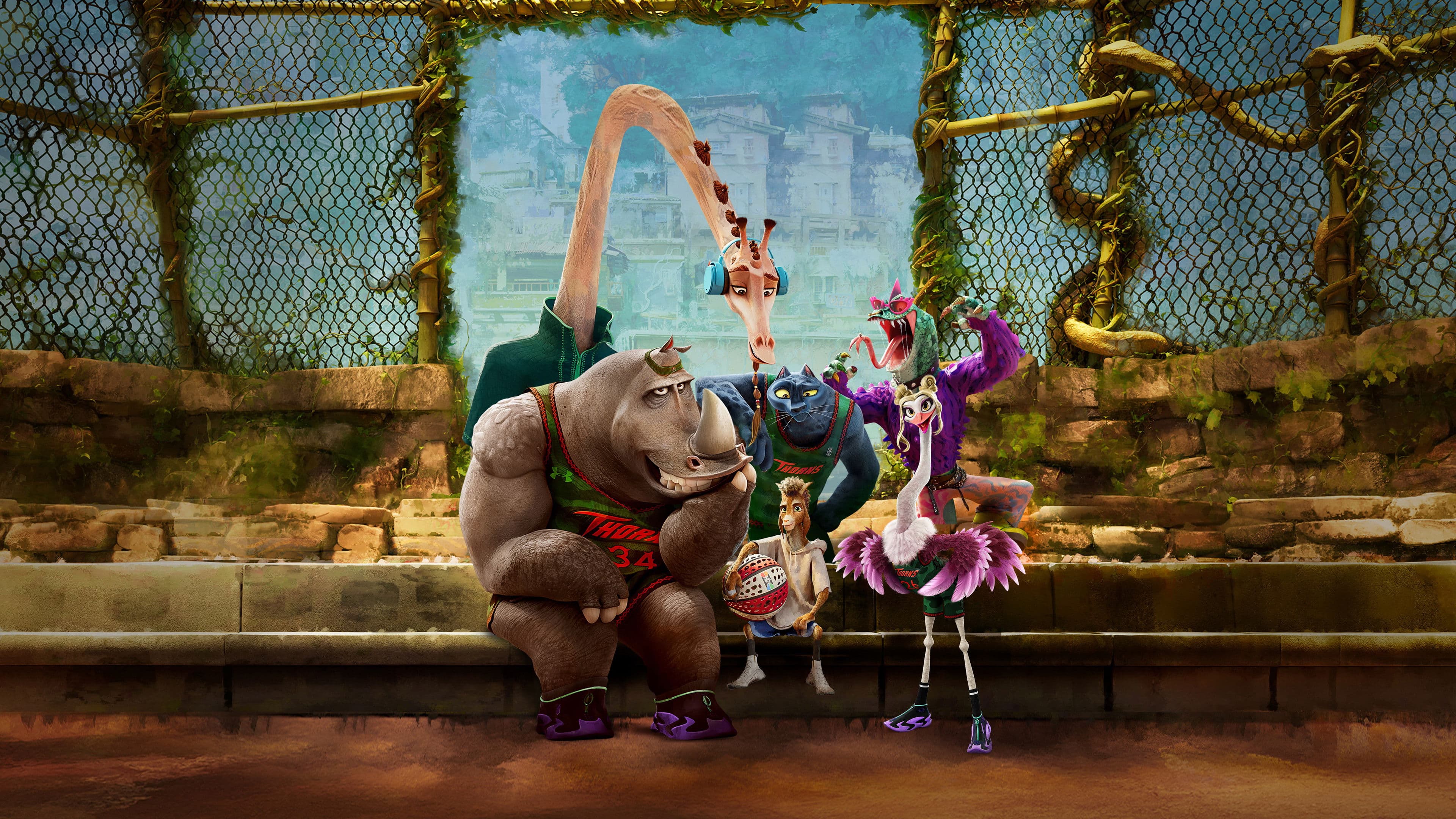
The plot is deceptively simple. Will Harris (Caleb McLaughlin) is a small goat with an oversized heart and an even larger obsession: roarball. For the uninitiated, roarball is the film’s gloriously chaotic invention - a co-ed, full-contact, high-intensity hybrid of rugby, obstacle racing, and aerial acrobatics. The sport is the domain of the world’s fastest and fiercest creatures, predators built for violence and velocity. Will, by contrast, is built for chewing grass and climbing rocks. Yet when a freak tryout opens a door, he finds himself drafted into the big leagues, mentored by the gruff but golden-hearted Lenny Williamson (Stephen Curry, delivering a surprisingly soulful voice performance), and pitted against the reigning champion, the arrogant Mane Attraction (Aaron Pierre).
To call it a sports movie would be accurate but reductive. Dillihay, who previously cut his teeth on visual-effects-heavy shorts, treats the roarball sequences with the kinetic clarity of a live-action thriller. The camera swoops through arenas packed with anthropomorphic fauna, and the sound design - hooves thundering, horns clashing, the roar of a crowd that includes everything from elephants to prairie dogs - immerses you in the chaos. You feel every bone-rattling tackle. But the film’s soul resides in the quieter moments between matches, where Dillihay and his writers resist the urge to make Will’s journey a simple case of "heart over horsepower."
Instead, GOAT asks a more interesting question: What does it mean to belong in a space that wasn’t built for you? Will isn’t just smaller than his opponents; he’s structurally unsuited for the game. Gabrielle Union’s Jett Fillmore, the team’s steely coach, doesn’t mince words when she tells him, "You’re not a lion. You’re not a wolf. You’re a snack with a dream." It’s a brutal line, but the film earns it - not by having Will prove her wrong through sheer moxie, but by having him discover an unconventional angle to the sport that turns his perceived weakness into a weapon. The screenplay smartly leans into the comedy of a calm, stubborn ruminant navigating a locker room full of hyped-up carnivores. Nick Kroll’s Modo Olachenko, a boisterous wildebeest with anger-management issues, and Jenifer Lewis’s Flo Everson, a veteran strategist whose age is her armor, provide both levity and wisdom without ever feeling like caricatures.
The voice cast is uniformly excellent, but it’s Nicola Coughlan as Olivia Burke, a swift and sharp-witted fox who becomes Will’s closest ally, who steals the emotional core. Her dynamic with Will is refreshingly free of romantic cliché; it’s a friendship built on mutual respect and shared fear. David Harbour’s Archie Everhardt, a washed-up commentator with a whiskey-soaked baritone, narrates the action with a melancholic gravitas that gives the whole affair a mythic weight. Harbour sounds like he’s calling a Greek tragedy, which is exactly the right register for a story about an animal who dares to defy the food chain.
Visually, the animation is a lush step forward. The fur, feathers, and scales have a tactile quality, and the arenas are rendered with a sweeping, cinematic scope that belies the film’s modest 100-minute runtime. Dillihay understands that comedy in animation often works best when played against a backdrop of genuine peril - the roarball matches feel dangerous, and the film never lets you forget that one wrong move could end Will’s career, or worse.
What elevates GOAT above its peers, however, is its refusal to offer easy catharsis. The final match doesn’t end with a triumphant, slow-motion victory lap. It ends with a lesson about grace, humility, and the awareness that sometimes the bravest thing you can do is redefine what winning means. For a family film released in a crowded February slot - often a dumping ground for lesser animated fare - that kind of nuance is a welcome surprise. Dillihay has crafted a movie that respects its young audience enough to show them that real guts aren’t about being the biggest beast in the room. They’re about being the one who stays in the room when everyone else expects you to flee.
As the year winds down and awards chatter begins, GOAT deserves a spot in the conversation. It’s loud, funny, and visually dazzling, but it also has a quiet, beating heart. Will Harris may be a small goat, but this film leaves a sizable footprint. If you haven’t seen it yet, do yourself a favor - and bring the whole family. Just don’t blame us if you find yourself cheering for a goat against a lion. That’s the point.